

Why the MAHA Commission - full of political operatives representing Project 2025/The Heritage Foundation and the America First Policy Institute - may not end well.
See accompanying video
On February 13, Trump created the MAHA Commission to examine root causes of childhood chronic disease: “The American diet, absorption of toxic material, medical treatments, lifestyle, environmental factors, Government policies, food production techniques, electromagnetic radiation, and corporate influence or cronyism.”
To me as a physician, this list is puzzling. So is the membership of the committee. In fact, a more appropriate title would be “MAHA, Project 2025 and America First Policy Institute Commission.”
MAHA itself, paradoxically, is the most obscure of the three. Kennedy’s campaign focused on vaccine safety, chronic disease and environmental toxins. Curiously, Trump’s Executive Order does not mention vaccines at all, instead referring ominously to “ending Federal practices that exacerbate the health crisis.”
America First Policy Institute (AFPI) is represented by its founder and CEO, Brooke Rollins, on the commission as Secretary of Agriculture. So is Lee Zeldin, as head of EPA. He was chair of AFPI’s “Pathway to 2025” initiative.
AFPI’s assessment of the state of healthcare in the US is quite different from what is described in the Executive Order, highlighting disparities in access to care and rising costs as the biggest issues. AFPI Healthcare policies are primarily focused on cost containment – reducing drug prices and controlling Medicare and Medicaid expenditures. Vaccines are not mentioned.
Finally, several members of the MAHA Commission (assuming all are confirmed) have connections to the Heritage Foundation and its Project 2025. Russel T. Vought, the Head of OMB, is one of the authors. Dr Jay Bhattacharya is aligned with the American Institute for Economic Research (AIER), located in Great Barrington, MA, which sponsored his eponymous Declaration orchestrated by Jeffrey Tucker, then at AIER. Tucker’s Brownstone Institute is also among the advisors of Project 2025. William Ruger, the President of AIER, is an author of Project 2025.
Dr Marty Makary is a graduate of the Claremont Institute and a Fellow of the Paragon Institute, both on Project 2025’s Advisory Board. So is America First Legal Foundation, founded by Stephen Miller, Trump’s Deputy Chief of Staff for policy and also a member of the MAHA Commission.
In assessing the state of health in the US today, Project 2025 strikes an alarmist tone, closer to the MAHA talking points. Post-COVID libertarian demands are there - to “severely confine the CDC’s ability to make policy recommendations.”
Anti-elitism is a big theme as well. Russel Vought in his chapter attacks the “pervasive notion of expert ‘independence’ that protects so-called expert authorities from scrutiny.” Makary and Bhattacharia would agree. Both came out strongly against the medical establishment.
But the main theme of Project 2025, consistent with the Heritage Foundation ideology, is corporatist, i.e. pro-business. This is well-known. As Jane Mayer writers in her book, Dark Money, The Hidden History of the Billionaires Behind the Rise of the Radical Right, “They said they were driven by principle, but their positions dove-tailed seamlessly with their personal financial interests.”
Project 2025 on the surface has anti-corporate themes – criticism of conflicts of interest, pharmaceutical companies “capturing” the agencies that regulate them. But behind this veneer is a pervasive pro-business agenda, such as requiring efficacy trials for generic drugs. Drug prices, one of the pervasive issues of US healthcare today, are not mentioned. No wonder the industry has remained quiet.
Another theme that runs deep in Project 2025 is family. Kevin Robbins, the new CEO, paints a vision for the country in his recent book, Dawn’s Early Light: “a bright American tomorrow, one full of children...” “The more children we have, the more young people we will have to help solve problems of tomorrow,” he writes.
But Kennedy’s MAHA platform could interfere with this vision, leading to massive death and suffering in this country and globally. MAHA Alliance CEO and an ally of Kennedy, Del Bigtree, recently spoke out against the Hep B vaccination of newborns – a standard practice due to their extreme susceptibility and risk of infection from an unsuspecting healthcare worker, friend or a family member. The death and suffering from this message alone will last for decades as about 25% of infected newborns are expected to die of Hep B cirrhosis or liver cancer. Other examples include halting the flu vaccine campaign, a spread of measles in Texas left uncontrolled (see my prior post), and others.
More broadly, the MAHA agenda could lead to worsening health outcomes by gutting federal healthcare agencies of people and budgets, stopping medical research projects, delegitimizing the medical establishment, discouraging life-saving interventions, ignoring disparities in care, and damaging the integrity of science through scientific fraud and “manufacture of evidence.”
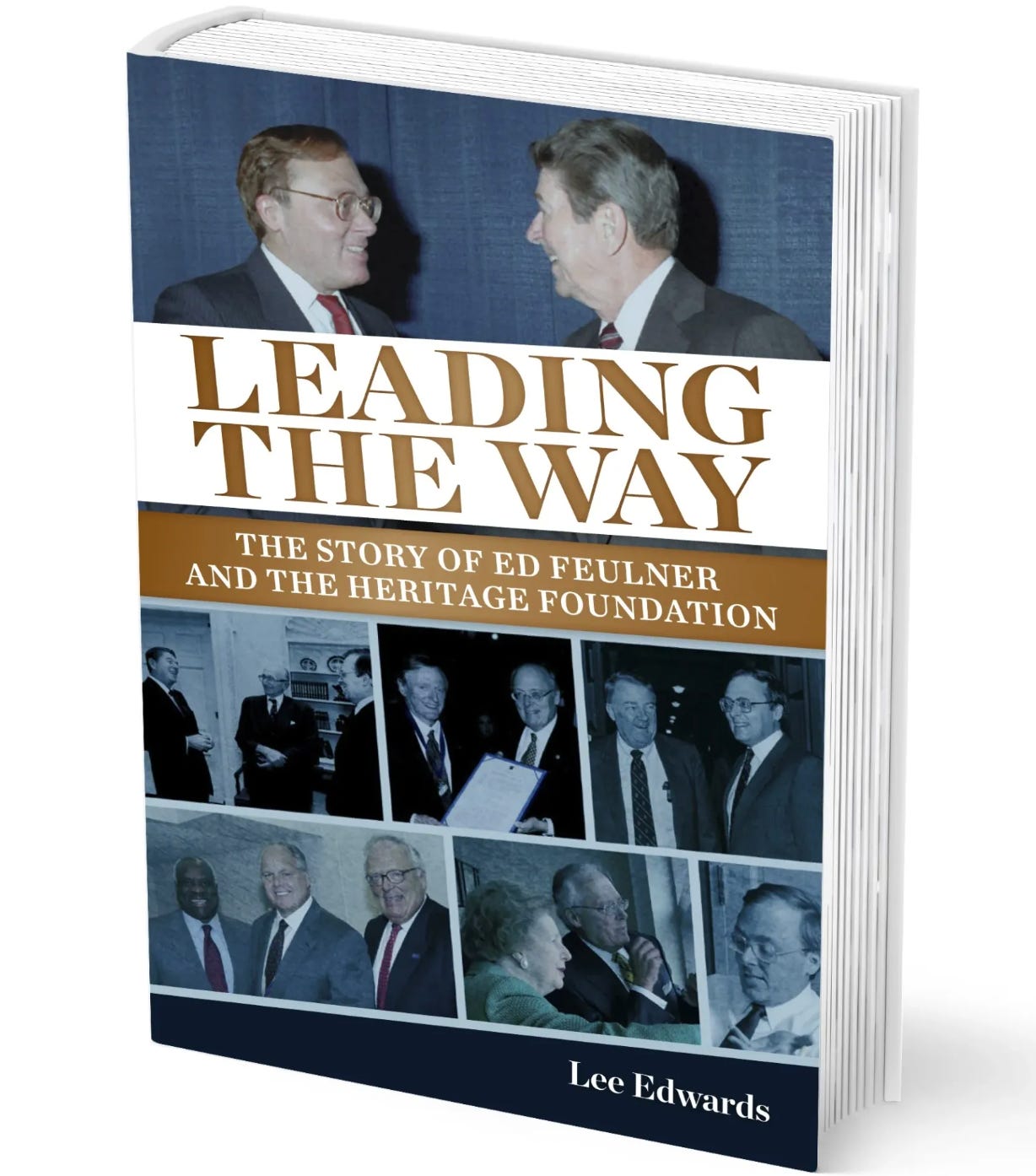
I spoke about this with Ed Fuelner, the founding CEO of the Heritage Foundation who led it for 40 years until stepping down in 2013 (he remains active on the Board of Trustees).
“I can say this with some certainty. Until President Trump decided that Robert F. Kennedy Jr would be his nominee for Health and Human Services, we had not had much to do with him,” he told me. “Mitch McConnell has been a good friend of mine for a very long time.”
I asked whether he worries that worsening health outcomes as a result of Kennedy’s agenda will put an indelible stain on the conservative movement.
“I certainly hope not, but you and I will certainly agree that evidence is black-and-white. The vaccines that have gone through appropriate clinical trials – it’s like polio and McConnell.”