


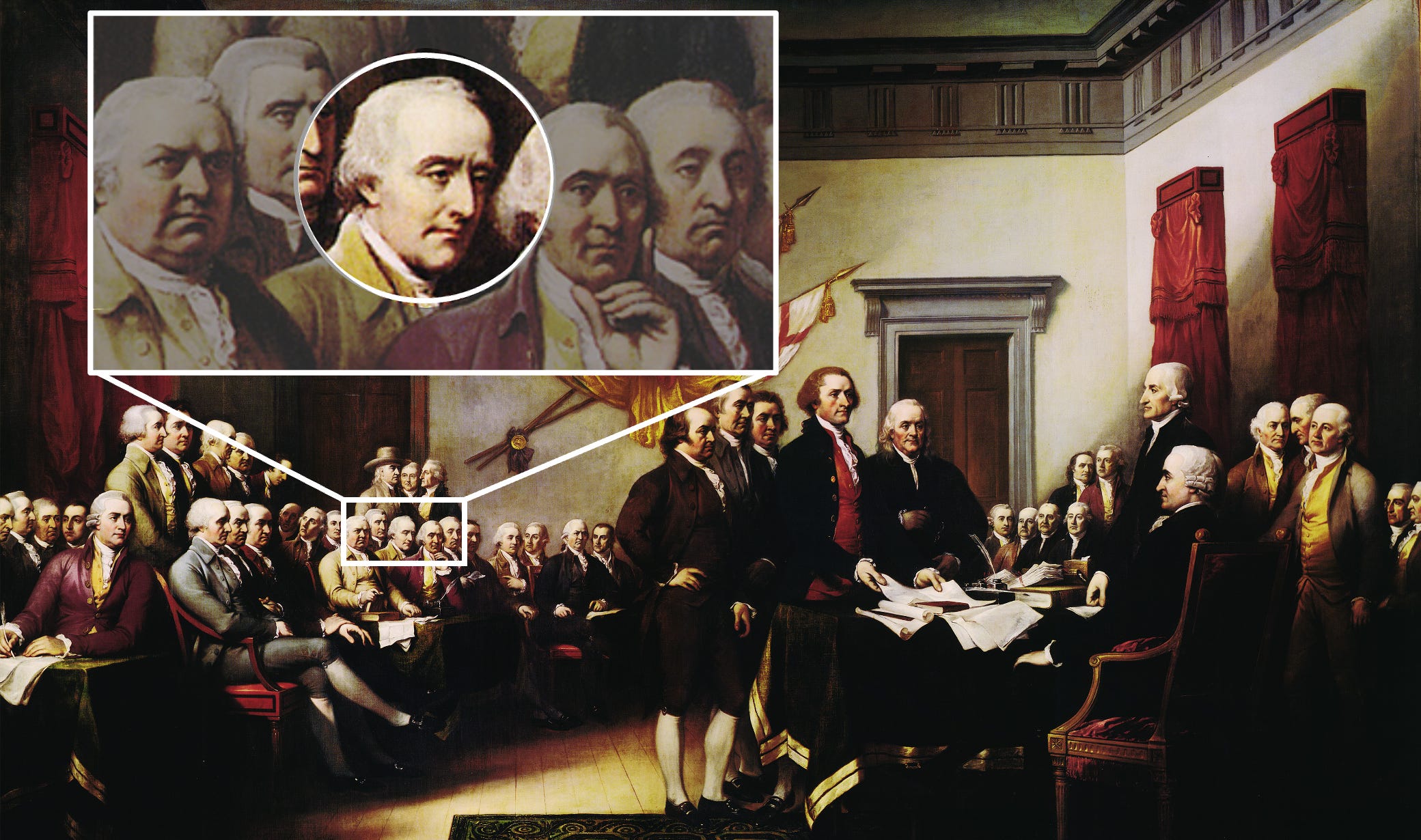
By Alex Morozov
IN THE US, there are dozens of institutions named after Benjamin Rush (1745-1813), a physician and US Founding Father. The list includes: Four K-12 schools; six parks; nine municipalities, five roads. But probably the most famous among them is Rush University, a medical institution in Chicago.
The Rush Library provided a bit of history in a recent blog post: “Surgeon Daniel Brainard, MD, (1812-1866) obtained the charter for Rush Medical College in 1837. He chose to name the school after a well-known and well-respected American physician, Benjamin Rush (1746-1813) of Pennsylvania… Chicago was a small frontier town, and Brainard was a young man with no reputation of his own. The lofty name of Rush matched the high hopes Brainard had for his endeavor…”
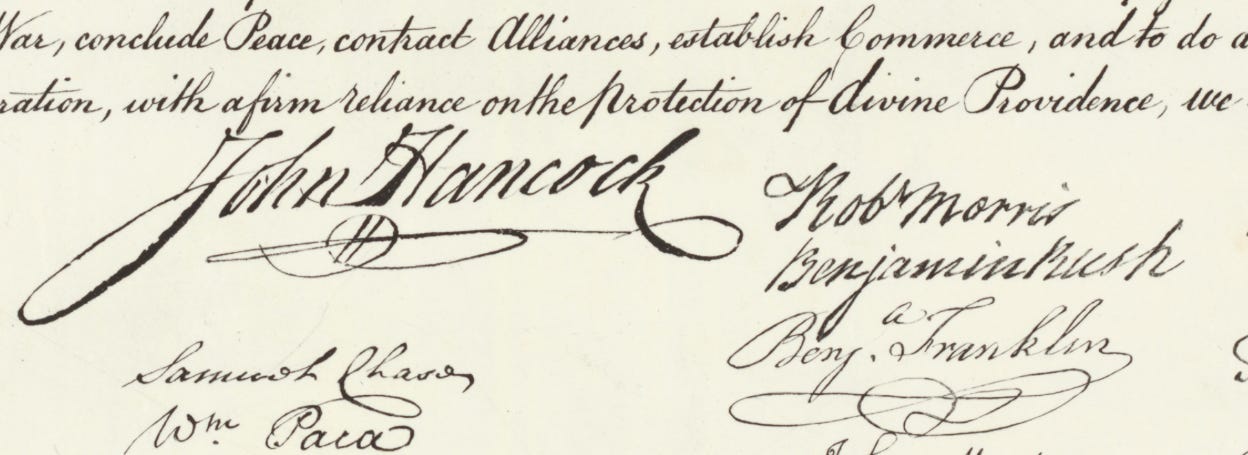
There were no medical schools yet in the newly born US, so Rush trained in Edinburgh, Scotland. He returned to Philadelphia to become one of the first professors at the College of Philadelphia Medical School, which later became the University of Pennsylvania Medical School. When the yellow fever epidemic struck Philadelphia in 1793, Rush worked tirelessly and never left the city, unlike many other local physicians who feared for their lives.
These were trying times for the city of Philadelphia. Government officials and wealthy citizens fled. Shipments into and out of the city were blocked. Food and other supplies were becoming scarce. In total, approximately 4000 out of 50,000 Philadelphians died in the 1793 epidemic.
Yellow fever is a viral illness spread by mosquitoes that still causes about 30,000 deaths per year worldwide, mostly in Africa. To this day, no specific antiviral treatment exists, and vaccination is the best strategy. Many patients have a mild illness and fully recover, but some develop severe disease with involvement of the liver, heart or kidneys. Severe illness leads to death in 20-30% of patients, even today. This unpredictable course makes it difficult or impossible to understand whether a particular treatment is helping the patient. If a patient recovers, the physician is likely to attribute their improvement to the treatment they received.
This is exactly what happened with Rush. Studying classic medical literature, he proposed that the main problem in yellow fever is accumulation of “noxious bile” throughout the body which had to be removed through all means—by bloodletting and by “purging” i.e. stimulating diarrhea and vomiting—collectively known as “depletion therapy.” Bloodletting had to be extreme—to the point of fainting, Rush believed. And to stimulate violent diarrhea, Rush used a mercury preparation called calomel.
Calomel, or mercuric chloride, is a white powder with a formula HgCl2—one atom of mercury, a highly toxic metal, and two atoms of chlorine. It was manufactured from a naturally occurring mercury ore called cinnabar. Toxicities of calomel and other forms of mercury are multiple. It accumulates in the brain, liver, kidneys and other tissues, causing profuse diarrhea, increased salivation, tremors, coughing, loose teeth, skin ulcers, memory impairment and a specific set of personality changes. The term “mad hatter,” made popular by Lewis Carroll in Alice in Wonderland, was coined because mercury nitrate was used in the production of fur hats in the 18th and 19th centuries, leading to chronic mercury poisoning among hat factory workers.
During the 1793 yellow fever epidemic, Rush treated five patients with depletion therapy—combination of extreme bloodletting and calomel. Four recovered—including one whose funeral was already planned. This provided the “proof” Rush needed in support of his radical treatment. “The appearance of the blood, and its effects upon the system, satisfied me of its safety and efficacy,” he recalled. “Never before did I experience such sublime joy as I now felt in contemplating the success of my remedies. It repaid me for all the toils and studies of my life. The conquest of this formidable disease was not the effect of accident, nor of the application of a single remedy; but, it was the triumph of a principle in medicine. The reader will not wonder at this joyful state of my mind, when I add a short extract from my notebook, dated the 10th of September. ‘Thank God! Out of one hundred patients, whom I have visited, or prescribed for, this day, I have lost none.’”
Today we know that Rush made a tragic mistake. “Depletion therapy” has since been shown to be harmful. Rush’s patients who recovered, did so not because of “depletion therapy,” but despite it. His claims of high success rates, curing “99 out of 100 patients”, were gross exaggerations. He kept no detailed records, but when a student at UC Riverside, Chris Holmes, matched the names of Rush’s patients to the Philadelphia mortuary records, he found a mortality rate of about 50%.
Yet, over the ensuing years, from the podium of University of Pennsylvania, Rush taught his “depletion therapy” approach to yellow fever, which he expanded to other diseases, including psychiatric illnesses. Thousands of students were trained by Rush and fanned out to practice and teach medicine across the US.
Rush would have continued for many more years if he wasn’t forced to flee Philadelphia by an unlikely adversary—a controversial investigative journalist named William Cobbett in what became one of the first documented examples, in the history of medicine, of using numbers to understand whether a treatment is effective. Cobbett obtained mortuary records and asked—“If depletion therapy works as well as Rush claims, why are the death numbers rising?” Rush sued Cobbett for libel, leading to the first high-profile libel trial in the US. Unable to remain at the University of Pennsylvania because of the ensuing scandal, Rush secured an appointment for himself as the Chair of Medicine at Columbia in New York. However, his appointment was blocked by Alexander Hamilton—Rush’s former neighbor and lifelong acquaintance who disagreed with Rush, “vehemently, on nearly everything.” Hamilton’s decision meant an end to Rush’s medical teaching career and slowed the adoption of depletion therapy, undoubtedly saving countless lives.
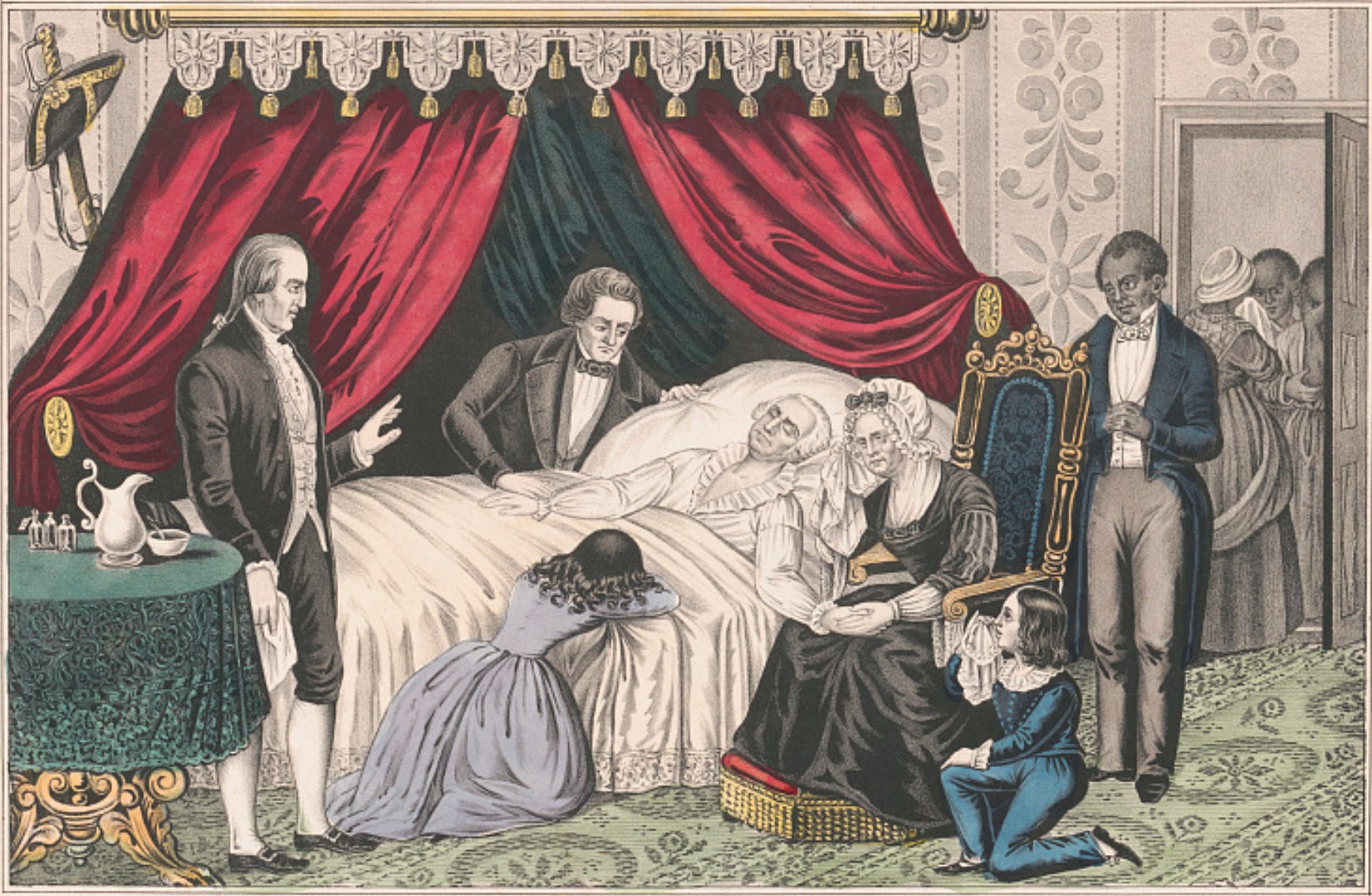
But it was too late for another historical figure: George Washington. One of Rush’s students, Dr. Elisa Cullen Dick, was by his side as George Washington lay dying from a throat infection on December 14, 1799 (by an odd twist of fate, the Rush vs Cobbett slander trial was wrapping up on that same day in Philadelphia). Two other physicians treating Washington were in their 60s, too old to train under Rush, but they trained in the same medical school as Rush in Edinburgh and under the same mentor as Rush, William Cullen, a big proponent of bloodletting.
It is no wonder that Washington received “depletion” therapy. He had several bloodletting procedures over a period of hours, some of which he insisted on himself. This was done by lancing a vein in his arm with a special instrument that looked like a Swiss army knife, and letting the blood collect in a basin below. Bloodletting was repeated until Washington’s blood was noted by the physicians to be “dark and slow to come.” In total, it is estimated that Washington was bled about 40 percent of his blood volume. This profound loss of blood, combined with calomel and other noxious treatments Washington received, undoubtedly accelerated his demise.
We understand today that a patient fighting an acute infection is at risk of septic shock—a condition in which inflammation spreads throughout the body, causing blood vessels to dilate and blood pressure to drop, making it harder for blood to reach vital organs. This would be further exacerbated by difficulty drinking and “insensible losses” of fluid such as sweating due to fever. For all these reasons, the mainstay of treatment for acute infection today is the administration of intravenous fluids. Removing blood would have the exact opposite effect.
When Rush was himself dying of typhus in 1813, at the same age of 67 as Washington, he also asked to be bled several times. I cannot think of better evidence that he was a true believer in the power of depletion therapy.
Yet, despite Rush’s grave medical errors, he continues to be celebrated by historians today. His two modern biographies (both published in 2018) are The Founding Father who Healed a Wounded Nation by Harlow Giles Unger and Revolution, Madness and the Visionary Doctor who Became a Founding Father by Stephen Fried.
“Rush is a difficult figure to pin down in the history of American medicine,” writes another historian, Sarah Naramore in her 2024 book, Benjamin Rush, Civic Health and Human Illness in the Early American Republic. “In the two centuries since his 1813 death, he has been alternately praised and reviled by physicians and historians.” But as the other two biographers, Naramore strikes a respectful tone.
In my conversation with Stephen Fried, he listed a few arguments that are commonly cited in Rush’s defense. (1) Bloodletting and purging was standard of care at the time - everyone was doing it, not just Rush; (2) He was an honorable and brave physician, a patriot and an abolitionist; (3) Cobbett is not to be trusted (Fried cautioned me that amateur historians often miss this point); (4) Rush did not treat Washington himself, and did not play any role in his demise; (5) The rumors about Rush were spread by ill-wishers like Cobbett and Rush’s political enemies.
Fried summed it up: “Rush was hardly a perfect man, but he was the first great teacher of medicine in America and he could only teach what was known.” He encouraged me to read Rush’s writings.
I followed his advice. What I discovered was truly horrific. My conclusion: many of Rush’s ideas and theories were abhorrent and misguided, primarily, it seems to me, because of his flawed logical thinking.
In 1787, Rush proposed a novel idea: that dark skin and facial features of Africans are caused by leprosy. In a 2023 anthology, Geffrey Galt Harpham, a Duke University professor and former Director the National Humanities Center, explains.
“Rush deplored slavery and the slave trade and insisted on the “natural equality of mankind,”… arguing in an address to the American Philosophical Society… that black skin should be considered not as a mark of racial difference, much less of inferiority; rather, he said, it should be regarded as a symptom of a disease—leprosy. Rush seemed only half-aware of the long history of treating lepers as outcasts to be confined to “colonies” and abandoned to their fates. He thought that if people understood that blackness was the consequence of leprosy, they might be more inclined to treat N… with compassion and humanity…
This concern may have arisen with special urgency from Rush’s research into leprosy. As he argued, leprosy was likely the consequence of unwholesome diet and heat, and produced a number of specific effects, including a distinctive smell (“the smell of a mortified limb”), blackened skin (“black, thick and greasy”), big lips, a flat nose, woolly hair, a tendency to sleep, and an insensitivity to pain—all of which had been associated with N… and considered as racial traits. Moreover, leprosy was very possibly infectious, a conclusion suggested by the reported darkening of white women married to Negroes.
If a cure could be found for leprosy, Rush argued, the disease and the resultant skin color could be eliminated at a stroke. Changes of color effected by various means had been reported, and Rush dwelled on the figure of Henry Moss, who, having turned from black to white, was being exhibited in a traveling show. With N… becoming white, slavery would lose one of its justifications, newly white people would be delighted with their improvement, Revelation would be confirmed, and “universal benevolence” would follow. Rush was unable to discover this cure, however, and his “Observations,” lacking any basis in science, were met with silence, surviving only as a curious artifact of their time and place.”
Here are a few direct quotes from Rush:
“...the color and figure of that part of our fellow creatures who are known by the epithet of n…, are derived from a modification of that disease, which is known by the name of Leprosy.
The leprosy induces a morbid insensibility in the nerves… This insensibility belongs in a peculiar manner to the n... Dr. Moseley says, “they are void of sensibility to a surprizing degree…They bear surgical operations much better than white people, and what would be a cause of insupportable pain to a white man, a n… would almost disregard.
The big lip, and flat nose so universal among the n…, are symptoms of the leprosy. I have more than once seen them in the Pennsylvania hospital.
Should it be objected to this theory that the leprosy is an infectious disorder, but that no infectious quality exists in the skin of the n…, I would reply to such objection by remarking in the first place, that the leprosy has in a great degree ceased to be infectious, more especially from contact, and secondly that there are instances in which something like an infectious quality has appeared in the skin of a n... A white woman in North Carolina not only acquired a dark color, but several of the features of a n…, by marrying and living with a black husband…
Beyond being sickeningly racist, these writings betray Rush’s flawed reasoning, riddled with contradictions and second-hand nonsensical anecdotes used as evidence. And unfortunately, this specific work is not an exception.
Rush has proposed similarly abhorrent theories about American Indians, “Turks,” women, the poor, “lower classes,” and others:
In the Indians of the northern latitudes of America, there is often a defect of the stimulus of aliment, and of the understanding and passions. Their vacant countenances, and their long and disgusting taciturnity, are the effects of the want of action in their brains from a deficiency of ideas…
Turk lives wholly to himself. In point of time, he occupies only the moment in which he exists… the absence of mental stimuli in these people is supplied, 1. By the heat of their climate. 2. By their passion for musical sounds and fine clothes, and 3. By their general use of coffee and opium.
The Dirt Phobia: This disease is peculiar to certain ladies, especially to such as are of low Dutch extraction. They make every body miserable around them with their excessive cleanliness.
Diseases among the lower class of people are generally simple, and exhibit to a physician the best cases of a epidemics, which cannot fail of adding to his ability of curing the complicated diseases of the rich.
In addition to such repulsive pronouncements, Rush’s work is peppered with passages that are just innocently ludicrous. Here are a few examples:
“The air which is applied to the lungs during sleep probably acts with more force than in the waking state… for the smell of a close room in which a person has slept one night, we know, is much more disagreeable than that of a room under equal circumstances, in which half a dozen people have sat for the same number of hours in the day time.”
[Old people] generally eat twice as much as persons in middle life, and they bear with pain the usual intervals between meals. They moreover prefer that kind of food which is savoury and stimulating. The stomach of the celebrated Parr, who died in the one hundred and fiftieth year of his age, was found full of strong, nourishing aliment.
…we read of many instances of blind persons who have been able to perceive colors by rubbing their fingers upon them. One of these persons mentioned by Mr. Boyle, has left upon record an account of the specific quality of each color as it affected his sense of touch. He says, black imparted the most, and blue, the least perceptible sense of asperity to his fingers. …
The blind man mentioned by Mr. Boyle who could distinguish colors by his fingers, possessed this talent only after fasting. Even a draught of any kind of liquor deprived him of it.
The dress of old people should not only be clean, but more elegant than in youth or middle life. It serves to divert the eye of spectators from observing the decay and deformity of the body.
Dancing should not be used more than once or twice a week. It should never be continued ’till weariness comes on, nor should we expose ourselves to the cold air too soon after it.
In no part of the human species, is animal life in a more perfect state than in the inhabitants of Great Britain, and the United States of America. With all the natural stimuli that have been mentioned, they are constantly under the invigorating influence of liberty.
Many facts prove, animal life to exist in a larger quantity and for a longer time, in the enlightened and happy state of Connecticut, in which republican liberty has existed above one hundred and fifty years, than in any other country upon the surface of the globe.
Even water itself, chemistry has taught us, affords an aliment not only stimulating, but nourishing to many animals.
Was Rush simply “teaching what was known?” To me, his writings stand out even among other scientists of that era, either his contemporaries such as Benjamin Franklin (1706–1790), or those who soon followed him, such as Florence Nightingale (1820–1910) and Charles Darwin (1809–1882). We have all read much older works of Plato (c.400 BCE), Machiavelli (1469–1527), David Hume (1711–1776) and others. I don’t recall feeling this much repulsion and bewilderment.
Nothing wrong with making mistakes - we all do. What is wrong, in my opinion, is to name institutions for someone whose errors and fallacies are so egregious.
Happy July 4th.