

By Alex Morozov, ETP News
“This is what the future of health care should look like.”
Nasha Winters, ND, LAc, FABNO. Metabolic Approach to Cancer. Chelsea Green Publishing: 2017
WHEN I WAS TRAINING in medical oncology at Memorial Sloan-Kettering Cancer Center here in New York, patients arriving for their appointments would get a clipboard with a few forms to fill out. One of the forms asked to list all the medications they were taking, including supplements. Some patients had so many that they would run out of space on the form and had to continue on reverse. I would always go through the supplements one by one. “Why are you taking this one,” I would ask. “And this one?” The answers were never clear.
Over the next few months, ETP News will be publishing several stories in a series we call “Selling Hope.” It is about financial incentives in healthcare more broadly, and particularly in cancer care.
This is Chapter I: Going Undercover.
***
We do not have good statistics on how many cancer patients in the US use “complementary and alternative” treatments, defined by the National Cancer Institute as those “not thought of as standard medical care.” Some studies say a third, some say more than half. They can range from vitamins, herbs, mushrooms, diets and fasting to coffee enemas, unapproved immunotherapies and things that even oncologists like myself have never heard of, like “extracorporeal blood ozonation.”
Rather than focusing on why patients choose these questionable treatments, I asked a different question - who are the doctors prescribing them? By “prescribing” I mean that the clinician writes in their clinical note, for example, “Take berberine, two capsules twice a day,” whether an actual prescription is needed or not.
How many doctors do this? To answer this question, we would have to dig into clinical notes - a herculean task. Even more of a mystery is what these doctors tell their patients - that’s not recorded anywhere. Are they upfront about the dubious benefits of these remedies? Do they warn patients of the risks? What if someone else prescribed it, or the patient is self-medicating - do they still bring it up, or turn a blind eye?
For supplements - I will use the term broadly to refer to any complementary or alternative medication taken by mouth or injection - the risks include not only their own side effects, but also drug-drug interactions. The supplement can make another drug (chemotherapy, antinausea medications, antibiotics, blood-thinners, etc) more toxic or less effective. Or the supplement and chemotherapy may cause “overlapping” side effects affecting the same organ, for example the liver. In a 2021 study by Dr Richard Lee, who now directs the Integrative Medicine program at the City of Hope Medical Center, about 80% of cancer patients receiving supplements were at risk for major drug-drug interactions.
During my time at MSKCC, our guidance to patients was simple: if the supplement is “food,” for example an herbal tea, you may continue taking it. If it is a medicine, for example if it comes in a pill bottle, don’t take it while you are on chemotherapy.
At UCSF’s Osher Center for Integrative Health, if the patient is combining supplements with chemotherapy, oncologists order an “eConsult,” sending the patient’s information to an expert pharmacist to assess the potential risks of this particular combination. It takes the pharmacist on average 1-2 hours of research, sometimes more, to provide the answer, according to a recent presentation by Dr. Kavita K. Mishra, the Center’s Clinical Director.
To see first-hand how and why these supplements are prescribed to patients, I went undercover, posing as a cancer patient myself. I prepared a fake colonoscopy report showing that I was diagnosed with colon cancer, a CT scan report showing liver metastases, and an imaginary oncologist’s note recommending chemotherapy.
I then saw a series of clinicians. I did not tell them that I am a physician myself. If they asked what I did for a living, I told them that I have an interest in AI and computers, which is true. My goal was to make sure that my experience would be similar to that of most patients, without any kind of special treatment.
Undercover journalism has a long history, going back to pre-Civil-War America, when Northern reporters attended slave auctions in the South, posing as prospective buyers. Today’s Code of Ethics of the Society of Professional Journalists, of which I am a member, advises reporters to “avoid undercover or other surreptitious methods of gathering information unless traditional, open methods will not yield information vital to the public.” In my case, these conditions were clearly met. Even if I were to find cancer patients willing to tell me about their experiences, I would not be able to piece together their full stories from their recollections alone.
I knew this undercover journey would be difficult, and it was. I felt terrible misleading my clinicians while looking them straight in the eye. My heart was racing, and my blood pressure was elevated, as was clear when medical staff took my vital signs.
My first stop was Lubbock, Texas, to see Dr Ben Edwards. His company, Veritas Wellness, “started as a small functional medicine clinic and has now evolved into a worldwide online wellness and education platform,” according to a local business organization. Veritas sells its own line of branded supplements, which means that the bottle says “Veritas Wellness” on the label.
Edwards referred me to a former colleague, also in Texas, who follows a “metabolic approach to cancer”. I then went for a second, third, fourth and fifth opinion at other providers, always bringing my growing pile of prior records and recommendations. I saw a naturopathic doctor (ND) who serves as Clinical Professor at a major academic medical center; a senior board-certified medical oncologist at the same center; a functional medicine physician at another major academic center; a registered dietician at the same center; a board-certified medical oncologist at a third major academic center; and an AI bot on a wellness platform. More on each visit in the following chapters.
My list of supplements evolved, with each practitioner mostly agreeing with the one before and in some cases adding more. It reached its peak at major academic center #1. I came in for my first visit there with 16 supplements, and left with 19, for a total of 69 active ingredients (not counting duplicates, i.e. the same ingredient found in multiple products). The naturopathic doctor “prescribed” the additional supplements to me via his own “dispensary” in an online marketplace called Fullscript, which pays a commission to “prescribers.” (Each prescriber selects their commission - from 0% to 35% - that is added to the patient’s price.) Major academic center #3 sells its own branded supplements, just like Veritas Wellness.
The supplements were prescribed to me not for general wellness, but as treatment for my cancer, and/or to reduce side effects of chemotherapy. To verify these claims, I used NatMed Pro. It is an online supplement database that covers 1,400 individual ingredients and 300,000 commercial products, making it by far the largest of its kind (A precursor of this database was used in the 2021 drug interactions study mentioned above). For each ingredient and commercial product, it provides a “monograph” - a long and detailed summary of all the scientific publications and reports supporting therapeutic efficacy, side effects and drug-drug interactions. Efficacy against diseases such as cancer is classified according to a scale: (1) effective (2) likely effective (3) possibly effective (4) possibly ineffective (5) likely ineffective (6) ineffective, or (7) “insufficient evidence.”
According to its website, NatMed Pro follows a strictly defined editorial process, in which they “systematically review the literature” and “give more weight to higher quality data and less weight to lesser quality data.” They “do not use traditional beliefs or folklore as ‘evidence’; rely on product manufacturer promotional material… or take any advertising or sponsorship...ever.” To accomplish this, they have a staff of about 40 editors, writers and contributors, and an Editorial Board of about 70 experts from the US, UK, Australia, Canada and Switzerland - physicians, chiropractors, nurses, nutritionists and others from an array of top universities, clinics and Centers for Integrative Medicine.
This vast resource appears to be primarily designed for clinicians, although the clinicians I visited either didn’t know about it or did not use it. Annual subscription costs about $180. (ETP News has no relationship with NatMed Pro, and they did not respond to a request for comment.)
There are free databases as well, even though they may not be as comprehensive as NatMed Pro. For example, one is called “About Herbs,” maintained by the Integrative Medicine Service at Memorial-Sloan Kettering Cancer Center. Drugs.com also lists many supplements and herbal remedies.
There is no way I could achieve the rigor of these large organizations, so I am not citing any individual supplement studies in this article. If I did, there would always be a question of why I chose one particular study or another. In addition, any article I cite may become outdated with time.
The supplements I was prescribed were all in the “insufficient evidence” category for effectiveness against cancer, according to NatMed Pro, except one (melatonin) which is in the “possibly effective” category (defined as “might be beneficial but does not have enough high-quality evidence to recommend for most people”). In terms of safety, NatMed Pro categorizes most of my supplements as “Possibly Safe,” defined as follows: “Products rated "Possibly Safe" appear to be safe, but do not have enough high-quality evidence to recommend for most people.”
For each of my supplements, NatMed Pro lists multiple side effects, and many risks: increasing or decreasing blood levels of other drugs, increasing toxicity of chemotherapy, and/or making chemotherapy less effective.
Over the course of my consultations, I was ordered 109 different blood tests (not counting repeats). Many tests had multiple measurements. For example, the complete blood count is one test that measures white cells, red cells, etc. My tests included a total of 230 different measurements.
I was charged enormous fees. Many were not covered by insurance at all. A two-hour zoom consultation cost me $3000. Supplements, about $1000/month. Blood, urine, stool and saliva tests, over $3000. Other visits could be covered by insurance, but I paid out of pocket. For a 7-minute discussion with an oncologist I was charged $1800. A one-hour consultation with a functional medicine doctor cost me $1400. I was simply informed of these prices and expected to pay. I was never asked about my financial situation or offered any financial assistance.
One provider was apologetic about the cost of supplements. He emphasized free shipping and discounts where possible. He made it sound like his recommendations were optional (“only if affordable,” he wrote in his clinical note). In my opinion, that’s not a good strategy when you are wearing a white coat and speaking with authority to a cancer patient. If the benefit is questionable, don’t ask the patient to spend the money. And if the benefit is clear, help them pay.
My main take-away from this journey: patients need better protections. As consumers, they are at their most vulnerable and need extra care.
***
It appeared that I fell into a regulatory loophole. I was prescribed cancer treatments, yet they were sold without any prior FDA approval, just like lettuce in a supermarket. Yes, supplement manufacturers can be inspected by the FDA. But very few are inspected each year - only 5% by one estimate.
This question - whether a supplement should be considered “food” or “drug” - has been debated by our government (and undoubtedly others) for decades, and the debate continues. Here is a simple way to think about this issue.
Let’s say I buy “grape juice” in the supermarket. According to the label, it contains 90% grape juice and 10% apple juice. But the manufacturer cheated - in reality it is 90% apple juice. Well, no harm done to my health. In contrast, the FDA defines a “drug” as a product “intended for diagnosis, cure, mitigation, treatment, or prevention of disease.” Setting cancer aside for a moment, let’s say I am diagnosed with vitamin D deficiency. That’s a disease. A doctor tells me to take some vitamin D to treat this disease. I get a bottle of vitamin D from the pharmacy. As a consumer, I need some assurance that the product (1) actually contains vitamin D - if it doesn’t, my deficiency will remain untreated and (2) contains the correct amount of vitamin D, so I don’t take too much or too little. These issues are unique to supplements. There is no such thing as a “grape juice deficiency.”
Then there are risks that also apply to food, but are higher for supplements: (3) Does it contain unwanted chemicals such as heavy metals? Yes, this can happen with food, but supplements are more at risk because they are often concentrated extracts; (4) Is it spiked (adulterated) with synthetic drugs? Because supplements are often taken for an ailment, the manufacturers may be motivated to add a drug like acetaminophen to make the patient feel better; and (5) does it contain microbial contaminants such as harmful bacteria? An herbal concoction may sit in your warm medicine cabinet for months. Food is usually consumed sooner and is often cooked.
All of these risks have been described for supplements and pose real dangers to consumers.
Finally, there is another important feature that distinguishes food from drugs: the need to monitor side effects. Food side effects we are largely familiar with. We get halitosis (medical term for bad breath) from garlic, and flatulence (medical term for passing gas) from beans. In contrast, a supplement may contain an unusual ingredient, or unusually high doses of an ingredient, or a combination, and we just don’t know enough about what might happen.
According to a 2015 New England Journal of Medicine study, more than 23,000 emergency room visits per year in the US are caused by supplements. Let’s say I go to a pharmacy and buy a supplement. But unbeknown to me, someone took that exact supplement last month and ended up in the emergency room . How would I know? Here the FDA is thankfully a bit more strict with supplements than with food. If someone knows and remembers to call the supplement manufacturer and report a “serious adverse reaction” - death or a life-threatening event associated with the use of the product - the manufacturer must report it to the FDA within 15 business days. That’s good. The FDA then enters these reports into a database called Human Foods Complaints System (HFCS). But then what? How can I, as a consumer, look up what events have been reported for my supplement? Unfortunately, HFCS is cumbersome to use. You have to download quarterly spreadsheets and search.
Or, maybe I want to see if this supplement manufacturer was one of the 5% that are inspected by the FDA each year, and if so, what did the FDA find? There is no easy way to do this, either. Supplements are often “white-labelled,” i.e. carry the name of the seller on the label, rather than the manufacturer, as is the case for Veritas Wellness. And the FDA lists inspections in their database by the manufacturer’s name, not the seller’s. So you would have to contact the seller, ask them who the manufacturer was, and then look them up.
***
Edwards, who gained attention last year for treating children while he had measles, has made national news before. (Edwards told the AP that he only interacted with patients who also had measles during this time.) In 2009, a Washington Post correspondent and a photographer spent a week in his small rural clinic near Lubbock, TX. At the time, Edwards, a family medicine physician with excellent credentials, was celebrated for bringing much-needed medical care, entirely conventional, to an area with very few doctors.
Shortly after, he pivoted to “functional medicine.” On a recent podcast, he described why.
“A brand-new clinic, a million dollars in the healthcare district’s bank account, the front page of the Washington Post. We got fame and fortune… I’m getting puffed up with pride. Seven years into this, I started scratching my head a little because nobody was getting well.… Diabetes, I give them metformin, and their sugar would come down for a while and stabilize, but eventually, a year or two down the road, I’m increasing the dose and I’m adding a second agent and a third agent. ‘By the way, now I’ve got heartburn. I’ve got hypertension.’ I’m just adding meds all the time in seven-minute visits.”
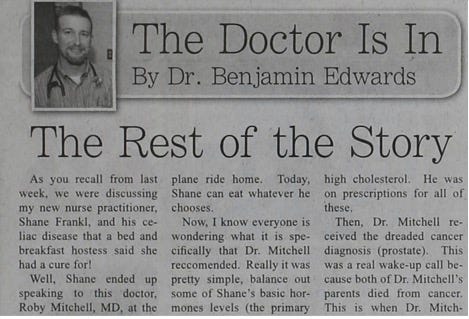
“But then it happened…the divine appointment that would change the course of my life and the lives of my patients in a dramatic way,” Edwards continues. “It came through my Nurse Practitioner… who had been diagnosed with Celiac disease, a condition where the gut reacts negatively to any wheat product. The conventional viewpoint is that Celiac, like most other diseases, can only be managed, but not cured…He encountered an Integrative Physician on a vacation who was willing to spend several hours telling him how he could actually overcome Celiac. He put the doctor’s advice to the test for several months and did become symptom-free.”
In 2012, Edwards described this story in a local newspaper. The same year, he and his wife founded Veritas Wellness. The business grew. Soon, they hired six providers across three locations. (Neither Veritas Wellness nor Edwards responded to repeated requests for comment or to be interviewed for this article).
On the company website, Edwards posted a note addressed to his physician colleagues.
“I invite you to come explore, with an open mind, the areas of healing that, if you’re like me, you were not exposed to in your medical training…. I was merely managing patients symptoms/diseases (which I thought was the only option) instead of arresting, reversing, eliminating and preventing disease (which I was told couldn’t happen).
But now I have found that Integrative and Functional Medicine offers the chance to do just that, REVERSE and ELIMINATE diseases, not just manage them. This is true health and wellness instead of disease management, i.e. “sickcare”...
I encourage you to view … Mark Hyman, the head of Institute of Functional Medicine. Check out his 2010 TEDMED video. It will give you a better idea of what I’m talking about and why so many physicians are choosing this path.”
To this day, the story of celiac cure remains on the Veritas website, part of Edwards’ welcome message.
According to a recent consensus statement from two dozen European experts, celiac disease remains incurable, requiring a strict, lifelong gluten-free diet. If Edwards came upon a cure back in 2011, patients would have benefitted greatly from seeing it published in a medical journal, and it would have made headlines around the world. Yet no such publication ever came (Edwards does not appear to have any journal publications at all). And the “integrative physician” Edwards credited for the “cure,” the late Roby Mitchell, has not left behind any scientific publications, either. He was repeatedly ordered by the Texas Medical Board to stop practicing medicine, once for injecting a cow with a patient’s blood and then instructing the patient to drink the milk.
***
The Veritas flagship location, on a wide, deserted street of downtown Lubbock, TX, looks like a boutique hotel, with waterfalls, plants and soaring ceilings. I told the receptionist that I would like to see Dr Edwards because of bad news I had received. I brought a colonoscopy report showing colon cancer in one of several biopsies.
A few well-dressed patients around me were speaking in hushed tones. After some back and forth, I was directed to the back, near an IV infusion area (Veritas offers multiple), to see a nurse. She took me to an empty office and looked at the report.
“I’m not a doctor,” she said, “But I am a nurse.” “First of all, you should not worry. Look - it says “low-grade” - that’s good” (she mistakenly pointed at the non-cancerous specimen).
“You should see Dr Edwards right away. He may give you some high-dose vitamin C… But don’t worry. Look - you are walking, talking - You are in God’s hands. Are you Christian?” “No, I’m Jewish.” “Oh, I am so confused by this Jewish religion,” she admitted. “Me too,” I said.
She assured me that she will work on getting me an appointment. Soon after I left, I received two phone calls - one asking me to purchase a $300 blood test panel on the Veritas website as a prerequisite for seeing Dr Edwards, and another to cancel the panel, and informing me that Edwards does not see cancer patients but will send me an email with some referrals.
Later that day, the email arrived, signed by Edwards.
“I believe you are making a very wise decision to look into some complementary and alternative modalities for overcoming cancer. Here is exactly what I tell my patients who get a diagnosis of cancer,” the email said.
“Proceed with your oncologist to get the official diagnosis… Conventional medical techniques typically do really good with stage 1 (just cut it out basically). But, once it has spread at all, then in general the rates of survival with conventional techniques start to go down pretty fast. This is when I really, really encourage looking at adding in complementary and alternative things. SOMETIMES the conventional protocols do pretty good with SOME cancers that are stage 2, 3 and 4, but for the most part the more advanced stages/spread are not “curable”, and the conventional protocols just “extend life a little”... Consider asking some alternative clinics if they have data on their 5 year survival rates for your particular cancer.
As an oncologist, I was appalled.
First, Edwards’ guidance to cancer patients - that “conventional protocols just extend life a little” - struck me as dangerously outdated.
Metastatic melanoma was previously a death sentence, with median survival (the point at which 50% of patients are still alive) around 4-6 months. Now median survival is about 6 years, and over 40% are alive at 10 years, getting as close to “cure” as melanoma patients have ever been.
Median survival for HER2+ breast cancer with chemotherapy alone was less than 2 years. Now it is nearly 5 years, and about 40% of patients are alive at 8 years.
Metastatic non-small cell lung cancer used to have median survival of 4 months. Now it is almost 2 years, and about 20% are alive at 5 years.
Metastatic kidney cancer used to have median survival of about 1 year. Now it is about 4 years, and over 40% remain alive after 5 years.
Overall, in the last 30-40 years, five-year survival for metastatic cancer doubled from about 17% to 35%.
At the recent Annual Meeting of the American Society of Clinical Oncology, a new drug for previously treated pancreatic cancer got a standing ovation when it was shown to double median survival (it was just approved by the FDA). And at the European meeting three years ago, a drug combination got a standing ovation for nearly doubling the survival of metastatic bladder cancer patients. Was Edwards aware of these advances?
Second, “asking” a for-profit “alternative cancer clinic” for their survival rates? From a consumer perspective, my advice to cancer patients would be the opposite: be very skeptical of outcome data self-reported by a for-profit cancer clinic. They are biased. They have a conflict of interest. They want your business. Look at each treatment individually and find studies done by independent researchers.
Third, trustworthiness aside, such numbers are hard to find. I searched and searched, but could not find an alternative cancer clinic with independently audited, cancer- and stage-specific five-year survival data demonstrating better outcomes than appropriately matched standard oncology care.
Edwards’ email continued…
Here are some clinics who specialize in alternative cancer therapies and have a track record that I typically refer to.”
He then listed seven “alternative clinics,” two of them in Mexico, two in Arizona (one of them subject of a recent New York Times story), one in California and two in Texas. All offer some combination of the following treatments: dendritic-cell vaccines, immune-cell therapies, high-dose vitamin C infusions, coffee enemas, laetrile, dichloroacetate, artesunate, IV curcumin, mistletoe, ozone therapy, whole-body hyperthermia, hyperbaric oxygen, UV blood irradiation, extracorporeal blood oxygenation/ozonation, chelation, sono-photo dynamic therapy, low-dose chemotherapy, and others.
There are dozens of such “alternative” cancer clinics in Mexico, centered around Tijuana. They advertise heavily in the US. The numbers of patients who travel there from the US are unknown but measure at least in tens of thousands over the last few decades. Dr Julie Gralow, the Chief Medical Officer of the American Society of Clinical Oncology, described some of her own patients to The Guardian last year: “...they find a clinic in Mexico which promises an all-natural treatment for cancer…In several cases, they came back after three months and didn’t feel any better. And then they stayed in our clinic and eventually we could gently ease them into more evidence-based treatments… A few times, they didn’t come back. And then I would learn within nine months they tragically had died.”
Timothy Claufield, a Canadian legal scholar and science communicator, and his team recently attempted to pull the curtain on these tragedies by analyzing the crowdfunding campaigns many patients run to raise money for the exorbitantly expensive trips to these alternative cancer clinics in Mexico. Their article is heart-wrenching. “Accepting a lack of curative treatment options was often rejected, positioning the recipient as a “fighter” who does not “give up as easily” or explaining that they had others who needed them to survive (“I NEED to be here to see my wee babies grow up and to be their mummy”).”
The American Cancer Society issued a warning regarding such “alternative” cancer clinics in Mexico: “The modalities and regimens used are often referred to as “metabolic therapy” and, for the most part, are either not based on sound scientific principles or have been shown in controlled clinical trials to be useless or even dangerous. A basic metabolic regimen consists of three phases: detoxification with fasting and bowel cleansing, strengthening the immune system with numerous “supplements, “ and attacking cancer with “natural and non-toxic” chemicals. Popular treatments include injections of hydrogen peroxide, large quantities of pressed liver and carrot juice, coffee enemas, infusions of Laetrile mixed with massive doses of vitamins and dimethylsulfoxide (DMSO), special diets, and a host of other pseudoscientific regimens… Patients traveling to the Tijuana area for metabolic treatments appear to be subjecting themselves to costly and hazardous regimens, especially if they forgo responsible medical care… The American Cancer Society, therefore, strongly urges individuals with cancer not to seek treatment with metabolic therapies in the Mexican border clinics around Tijuana and elsewhere.”
This warning, while powerful and relevant, was last issued in 1991. The Mexican clinics Edwards referred me to, Oasis of Hope and Hope4Cancer, have been around for decades. The same treatments listed in the ACS warning are still being offered there today, plus newer, equally questionable “experimental immune therapies.” Some joint crackdown efforts against Mexican alternative cancer treatment clinics by the Mexican and US governments occurred in the early 2000s, but their success is unclear. Now similar clinics are proliferating in the US. How many other practitioners like Edwards “typically refer” their cancer patients there? (Hope4Cancer told ETP News that the center “takes an integrative approach to cancer care by combining non-toxic therapies with conventional medical treatments when clinically appropriate.” Oasis of Hope did not respond to a request for comment. Their website indicates that they also offer some conventional treatments. Both clinics appear to employ oncologists, according to their websites.)
Since 1991, to my knowledge, no other professional organization issued a similar warning regarding the dangers of alternative cancer clinics except the German Cancer Society in 2024.
The American Cancer Society website does have a section, “How to Use Integrative (Holistic) Therapies Safely,” which includes a warning, “Avoid products that claim to be ‘miracle cures.’” But specific examples are no longer called out by the ACS. Why?
At a recent conference, I caught up with Dr Otis Brawley, an oncologist who served as Chief Medical Officer of ACS from 2007 to 2018. He offered two explanations. “There are a few patients who have a little bit of money who go to Tijuana and give money to ACS. If you piss people off, they won’t give you money. Don’t get me wrong, ACS has done some things that required courage, like supporting the Affordable Care Act. But these concerns, ‘if we do this, it will hurt our fundraising,’ are real. It’s been part of ACS culture.”
Brawley has raised this issue before. The reason for his resignation from the ACS in 2018 was reported to be his dismay with the Society’s commercial partnerships, particularly with Herbalife International.
“The other factor is fear of lawsuits,” Brawley told me. “Tijuana clinics advertise in the US. They can see you. Sometimes the lawsuits don’t necessarily stick. But the fact that you get dragged in court, you have to pay lawyers, and so forth – that’s one of the reasons ACS is cautious. I actually wanted ACS to go after unproven treatments offered in the US, but the ACS lawyers told me to stop criticizing.”
ACS has not responded to a request for comment.
Leading academic centers are also mostly silent. A head of integrative medicine at a major cancer center told me, “I was going to write a monograph about ivermectin, as a public service…” He was referring to the antiparasitic agent that has become the mainstay of complementary and alternative cancer treatment despite scant data and no FDA approval as cancer treatment.
“But our Public Relations department said No. They don’t want to attract bad publicity. All it takes is one TikToker, and it will tank your whole business.”
***
Charlatans - traveling salesmen selling “snake oil” and other miraculous cures - have existed for centuries. But what happened in the nineteenth century America was unique and unprecedented: ingredients became secret. Officially, this was necessary to protect “trade secrets” from competition, hence the medicines were called “proprietary.” But the real reason was that true ingredients would have shocked the public - alcohol, opium, cocaine and others. They helped mask some symptoms, while making the remedies addictive, dangerous and sometimes fatal. Opium-containing tinctures were marketed as treatment for colic in infants, for example, causing death and disability. And needless to say, these remedies were completely incapable of the claimed benefits for cancer, gout and other ailments.
With the ingredients hidden, all the consumers had to go by was the brand: a catchy name, label with cute drawings and claims of amazing healing powers, packaged in a distinctly shaped glass bottle. The brand was protected by trademarks, not patents, but for historical reasons the term “patent medicines” is used.
The companies selling these remedies achieved enormous success, becoming some of the first national corporations in the US, through vast advertising campaigns. Newspapers derived half of their revenue from medicine ads, and special “red clauses” in advertising contracts prevented them from criticizing the industry. Thanks to the dropping cost of postal services, direct-to-consumer mailings proliferated. Patient testimonials described miraculous cures, and celebrities endorsed medicines they had not even tried themselves. Free pamphlets called “almanacs” were produced by the patent medicine manufacturers, containing entertaining material interspersed with advertisements for their products.
Just like today, the patent medicine-era “conventional physicians” spoke up against the dubious remedies. They told stories of patients appearing drunk, becoming addicted and dying of withdrawal - particularly striking during the prohibition era. The Journal of the American Medical Association repeatedly attacked “patent medicines,” contrasting them with “ethical medicines” - the few that had known ingredients such as digitalis.
Of course, conventional medicine was in its infancy. The “ethical” medicines were only marginally effective, if at all. Bloodletting and other aggressive, ineffective treatments were common.
So, just like today, the temptation among physicians to break rank proved irresistible for some. Many patent medicines were branded with physician’s names: “Dr. Pierce’s Favorite Prescription,” “Dr. Kilmer’s Swamp-Root,” “Dr. Williams’ Pink Pills.” These were not just marketing tricks - these were real physicians turned entrepreneurs.
How does an established physician become a salesman for a medicine of their own making? A playbook appears to have been developed during the patent medicines era. It involves a miracle cure, leading to an “epiphany,” leading to a new “philosophy of disease.”
Samuel Hartman was the physician behind a top-selling patent medicine, Peruna. He trained at Western Reserve Medical School (later to become Case Western Reserve, Cleveland Clinic’s affiliated medical school) and Jefferson Medical College, now part of Jefferson Health. In the 1860s, Hartman acquired a small herbal company and eventually developed Peruna as a cure for “catarrh” - the term which initially meant congestion or diarrhea.
Almost exactly 100 years before Edwards’ newspaper article describing a miraculous cure for Celiac Disease, Hartman published a strikingly similar article about a patient with severe kidney disease. Even though Peruna was not known to treat kidney disease, the patient pleaded with Hartman to prescribe it. When he finally relented, the patient had a miraculous recovery which led Hartman to discover “the correct philosophy of disease” “not taught in the books.”
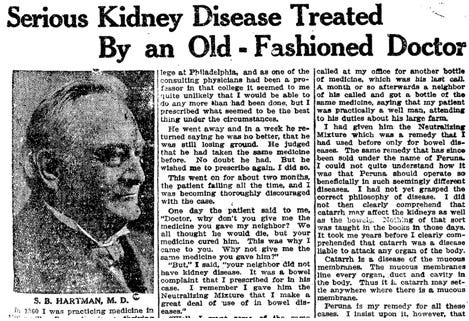
“I could not quite understand how it was that Peruna should operate beneficially in such seemingly different diseases. I had not yet grasped the correct philosophy of disease. I did not then clearly comprehend that catarrh may affect the kidneys as well as the bowels. Nothing of that sort was taught in the books in those days. It took me years before I clearly comprehended that catarrh was a disease liable to attack any organ of the body.”
In 1905, Hartman received a letter from a journalist named Samuel Hopkins Adams requesting permission to visit. Hartman agreed - he was as confident as ever. By that point, Peruna was one of the top-selling patent medicines, used by about half of US households. “Hartman welcomed Adams in Columbus, Ohio, with ‘I will tell you anything; you can’t do us any harm,’” according to Adams’ biography.
But unbeknown to Hartman, Adams was an experienced investigative reporter commissioned by Coliers, a leading national magazine, to write a series of articles exposing the patent medicine industry.
“Adams’s grasp was firm,” recounts his biographer. “He adopted the advice he later gave to the medical profession: “Find out where the foe is before you strike. Don’t hit out with your eyes shut.” The reporter bought samples of the suspect medicines, had the contents analyzed, and gathered their accompanying literature. He consulted with state agricultural chemists, editors of pharmaceutical journals, and medical research experts to assess how successful these “cures” were… Before his legwork began, he enlisted a chemistry professor at Hamilton College… his analysis showed the patent medicine Peruna contained alcohol of more than 28 percent by volume.”
On October 7, 1905, after a build-up of anticipation by Coliers, Adams’ first article was published under the headline, “The Great American Fraud,” with the now-famous first paragraph: “Gullible America will spend this year some seventy-five millions of dollars in the purchase of patent medicines. In consideration of this sum it will swallow huge quantities of alcohol, an appalling amount of opiates and narcotics, a wide assortment of varied drugs ranging from powerful and dangerous heart depressants to insidious liver stimulants, and, far in excess of all other ingredients, undiluted fraud.”
Adams zeroed in on Peruna in the second installment, on October 28, taking aim at Hartman’s “catarrh is everywhere” theory of disease.
“What does Peruna cure? Catarrh. That is the modest claim for it; nothing but catarrh... What is catarrh? Whatever ails you....”
And he debunked Peruna’s claim that it’s less addictive than the alcohol it contains.
‘what makes Peruna profitable to the maker and a curse to the community at large is the fact that the minimum dose first ceases to satisfy, then the moderate dose, and finally the maximum dose; and the unsuspecting patron, who began with it as a medicine, goes on to use it as a beverage, and finally to be enslaved by it as a habit.”
Coliers sold out instantly, and hundreds of thousands of copies were printed, and reprinted, over and over again.
The reaction was swift. Just a few weeks later, in his State of the Union Address on December 5, 1905, Theodore Roosevelt announced, “I recommend that a law be enacted to regulate interstate commerce in misbranded and adulterated foods, drinks, and drugs.”
A few months later, Roosevelt signed the 1906 Food and Drug Act, the precursor to the FDA.
Fast forward to today. The ingredients are no longer secret, and there is no evidence of widespread fraud. But the catchy titles remain. There are the podcasts peppered with advertisements, the modern-day equivalent of almanacs. There are the patient testimonials and celebrity endorsements. And doctors-turned-salesmen.
***
I chose the clinic from Edwards’ list for which he added a personal note: “This is a former Physician Assistant of mine, Micah Jackson, whose dad overcame a cancer diagnosis primarily by using Dr. Nasha Winter’s protocols. Micah was trained by Nasha and now works independently and does online, virtual consultation to help guide people through a cancer diagnosis.”
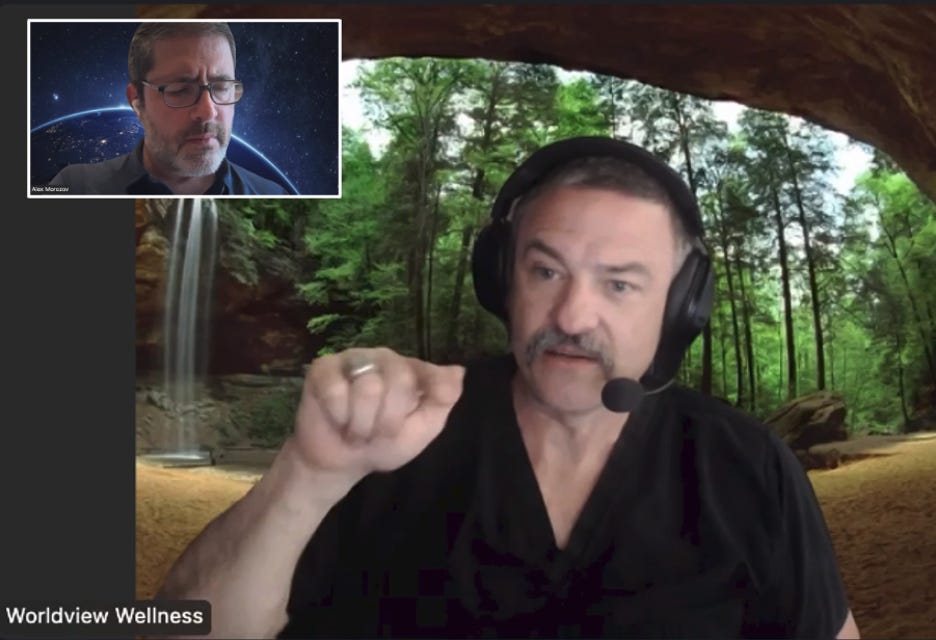
Jackson started his career as a paramedic, trained as a Physician Assistant at Texas Tech in Lubbock, TX and went to work in Edwards’s practice. When his father was diagnosed with cancer, Jackson brought him to see Edwards. They initially understood this to be the most common type of pancreatic cancer, pancreatic ductal adenocarcinoma, and learned about its poor prognosis. The news hit hard, Jackson and his father recall in a Worldview Wellness promotional video. Edwards started Jackson’s father on an “integrative, functional protocol.” After about six months, they consulted with a naturopathic doctor, Nasha Winters, who had recently published a popular book, Metabolic Approach to Cancer.
Meeting Winters changed Jackson’s career.
“I really felt like God called me to learn the “metabolic terrain approach’,” he says. He completed a “Masterclass Program in Integrative Functional Oncology,” a course developed by Winters consisting of about 34 hours of recorded lectures and 12 live discussions, typically completed in 4 months. Jackson compared it to “drinking from the fire hydrant.”
In 2021, Jackson opened his own practice, Worldview Wellness, with his wife, Tye, serving as a “Client Advocate.” His father became one of his first patients. (Worldview Wellness did not respond to requests for comment or to interview Mr. Jackson for this story).
In Texas, a physician assistant cannot practice medicine without physician oversight. It is not clear who this physician is for Jackson, if any, given that Edwards described Jackson as “practicing independently” and no physicians are listed on the Worldview Wellness website or under Jackson’s PA license information.
A few hours after I filled out an inquiry form on the Worldview Wellness website, I received a call from Mrs. Jackson. She offered me the “Chronic Illness Onboard Package” which consists of comprehensive testing (blood, urine, saliva, stool), review of medical records and a two-hour virtual consultation, for the price of $3000, not including the tests.
In a follow-up email, she described Mr. Jackson as “one of Nasha’s most highly referred clinicians in her network.” “In your two-hour Onboard Zoom Consultation, we will review your diagnosis, any chemo and surgical recommendations, lab results, your Intake Form and foundational plan. … We may recommend a host of lifestyle and supplement recommendations, including Mistletoe Therapy, sauna, IV therapies and more. Regardless of the mix of recommendations, they will all pair beautifully with standard-of-care medicine, oncology or as a plan that can stand alone.”
After I paid the fee, Mrs. Jackson sent me instructions to undergo testing: stool and saliva tests totaling $785 plus shipping and processing fees, and blood tests totaling $655. The instructions warned to expect 15–17 vials of blood to be taken.
Later that day, Mrs. Jackson sent me a cryptic text message: “New York is very strict about Integrative Functional Testing and there are some things we are going to need to work around.” When we got on the phone, she explained that the stool and saliva test kits are not licensed in New York, so the manufacturer will not ship them to a New York address. I offered to go to another state, and we agreed on Connecticut. I found the nearest hotel just across the New York State border and provided that as my shipping address. “Fantastic,” wrote Mrs. Jackson.
In preparation for my consultation, Mrs. Jackson asked me to submit my medical records and complete a 64-page intake form, including several pages of questions about electromagnetic field exposure.
I was also asked to sign a “Consent/Waiver” which said, among other things, that “Micah Jackson and Worldview Wellness do not diagnose, treat, cure, or prevent any disease.”
However, this is exactly what they do, as became clear during a brief orientation call we had prior to the formal consultation.
“I don’t see a lot of people that get a complete cure where you’re at,” Mr. Jackson said. “But when we do this complementary plan, I do think there is a chance that we could get you there. And regardless, we will definitely improve both the quantity and quality of your life.”
“What if you could live for 20–30–40 years with colorectal cancer? What if you could? All things are possible through Christ,” added Mrs. Jackson. “We’ve seen amazing miracles here. And we’ve got lots of Stage IV clients who’ve been with us for six years, as long as the doors have been open to our business.”
I asked whether I should tell my oncologist that I was consulting an alternative provider.
“I think the best-case scenario is when you tell them everything,” Mr. Jackson said. “But most oncologists will not feel very good about that because they are not familiar at all with what I do… Some oncologists are so opposed that it can get in the way of their treatment. Some people end up firing their oncologist and picking a new one. If you are with an oncologist right now who is adamantly opposed to you doing anything other than chemotherapy, I leave that up to you. But if it were up to me, I would fire that oncologist and go find me a new one.”
“A lot of people get anxious about the fact that what they hear from me and what they hear from their oncologist doesn’t always line up,” he continued. “And that’s not really a problem from my perspective as long as you, as an individual, are able to weigh both sides.”
Mrs. Jackson was more blunt about which “side” is in charge.
“When you meet with the oncologist from this point forward, any time they do labs for you, any time there is a new scan, any time they change your plan, any time there is new information, you’re going to bring it to us… We are going to be watching, and looking at, and overseeing everything that you do on both sides of this fence. If you feel that you need to get to urgent care because you might have a flu, you’re going to contact us. We want to walk you through what needs to happen next. And if we feel that going to urgent care is appropriate, that’s what we’ll suggest. If someone suggests an antibiotic for you, instead of taking it, you’re going to tell us first. And then we’re going to say ‘Nope, you can’t have that. Go back and ask for this instead.’ Or, ‘That’s a great fit for you. Please continue forward.’ What we’re going to try to do is make sure that everything that “standard of care medicine” recommends for you is the right thing. And then we’re going to teach you how to fight for the right thing.”
Once the lab results were in, it was time for my zoom consultation with Mr. Jackson.
The two-hour-long call proceeded in a sequence unfamiliar to me. Normally, a medical consultation starts with collecting “subjective” information - the patient’s chief complaint, their history of present illness, past medical history, family and social history, allergies, medications, etc. Then comes “objective” - a physical exam (there is actually a modified version that can be done on a virtual call), review of labs, imaging and other tests. Once all the data is gathered, the doctor provides an overall “assessment” and “plan” - what is recommended.
Mr. Jackson started instead by reconstructing the story of my life. How was I born, vaginally or via C-section? Was I a healthy child? What was my relationship like with my parents? When did I come to the US from Russia? Where did I go to school? What do I think about AI? He then transitioned into my past medical history and zeroed in on high cholesterol for which I had recently started rosuvastatin.
“That one I am going to recommend that you discontinue,” he announced, cutting straight to “plan” for a moment. He explained that the link between cholesterol and heart disease is a correlation, not causation, and informed me that rosuvastatin could have contributed to my cancer diagnosis.
He then proceeded to postulate another reason for my cancer. “Being in New York City, I would imagine that you took the COVID vaccinations. Is that true,” he asked. I nodded. “There’s a reasonable chance that that vaccine played a part in your development of cancer… the conventional doctors as you’re going through cancer treatment may recommend to you, ‘Get your pneumonia vaccine! You need to get updated on your COVID booster! You need the meningitis vaccine!’ My recommendation to you is, from this point forward, no vaccines…. If your oncology team or anybody else really wants to do vaccines, I would tell them, ‘I don’t do vaccines.’”
When we got to the cancer treatment, he reviewed my oncologist’s note, which contained a recommendation for a standard treatment regimen for metastatic colorectal cancer, FOLFOX (a chemotherapy combination of Fluorouracil, Leucovorin and Oxaliplatin) plus bevacizumab, an antibody.
“They want to start you on FOLFOX plus the bevacizumab as the proposed treatment. And I don’t think you’re a good candidate for the bevacizumab. The rest of that I think you are a good candidate for. Bevacizumab is a drug that is what’s called a ‘VEGF inhibitor.’ It has a particularly nasty set of side effects. And you do not have an elevated VEGF.”
This approach – to use blood VEGF levels to determine whether a patient should receive bevacizumab – is not part of the NCCN professional guidelines which are considered a “gold standard” for oncology care in the US. The general concept is certainly valid. For many, perhaps most, cancer treatments, years of research have led to the discovery of a “biomarker” to select patients that are most likely to benefit. But for bevacizumab, such a biomarker has never been found. VEGF levels, or any other blood or tumor tests for that matter, do not predict response to it.
And there was an even bigger issue. Mr. Jackson was apparently unaware that the oncologist’s note contained an error. For the specific type of colon cancer described in the note, called “MSI-high,” immunotherapy such as Keytruda leads to dramatically improved outcomes compared to chemotherapy.
Our meandering consultation continued, with me answering questions and Jackson giving medical recommendations along the way, interspersed with mini lectures about vaccines, statins, aspartame and other topics. In addition to rosuvastatin and vaccines, Jackson proposed several other possible causes of my cancer:
- Diet Coke;
- electromagnetic field exposure;
- toxic exposure from New York-area “Superfund Sites”;
- my relationship with my parents;
- growing up in Communist Russia;
- my cell phone;
- dental work.
On the latter point, he explained: “There are energy pathways through the body, and they actually run through meridians that are in your mouth that are channeled through specific teeth. I have seen a high degree of correlation with people who do have root canals to where their cancer is…” He asked me to provide dental records so he could assess whether my dental work caused my cancer.
He encouraged me to think about leaving New York City. Finally, he told me to keep my cell phone away from my body (he said he uses a “man-purse” for this reason).
During the consultation, Mr. Jackson repeatedly criticized conventional physicians. They use “pressure and fear.” They have no real understanding of cholesterol. They do not know how to manage hormones. What they call the “normal range” is not actually normal.
Mr. Jackson was pleased with some of my lab results, even obscure ones. “Your phosphorus level is great, your GGT level is great, your fibrinogen level is optimal. You’ve got great methylation.”
However, he identified a hormonal imbalance. “You’ve got very low testosterone; you’ve got very high estrogen. So, I’m going to be very aggressive with you. I’m going to have you on two supplements to kind of resolve that imbalance.” In this case, Mr. Jackson did not appear to follow a basic rule of clinical practice: an abnormal test should be repeated before taking action, especially “aggressive” action. In fact, when my testosterone and estrogen levels were retested at a later date, they were normal, even though I did not take any of the supplements.
Then Mr Jackson turned to the actual “metabolic” approach to cancer: a strict ketogenic diet (a lot of meat, very low carbohydrates;) a 16-18-hour fast daily, and a three to five-day water-only fast monthly. “There’s no need to take your supplements when you’re doing an extended fast,” he clarified.
A multi-day water-only fast, while undergoing chemotherapy? Dr Valter Longo, an expert in fasting as a cancer treatment at the University of Southern California, says the following in his recent book, Fasting Cancer: “Given health concerns associated with water-only fasting, including the risk of low blood sugar, blood pressure, sodium levels, etc., it’s normally not allowed outside of specialized clinics where patients can be closely monitored.”
(I tried a five-day water-only fast anyway. It was even worse than I thought. More on this in a subsequent chapter.)
As we neared the end of my two-hour virtual consultation with Mr. Jackson, I was deeply shaken by what I heard. But I was not prepared for what came next.
“Something that I really loved about you as a Jewish guy was that you were very open to receiving help from Christians,” he said. “So, I’m going to start you off with a pretty challenging scripture from a Christian-Jewish perspective. Have you ever read Isaiah 53?”
I had not. After the consultation was over, I learned that Isaiah 53 is a passage cited by some evangelical Christian organizations aiming to convert Jews to Christianity.
“This passage is going to be very challenging to you as a Jew,” Mr. Jackson continued, “because it talks about an Old Testament prophet Isaiah that is basically talking about who Jesus is and what he’s going to be sent to do. And a lot of the Jewish rabbis, they really don’t like that passage because of what it means. And it’s very challenging to the Jewish faith. But I think … we have a soul and a spirit and a physical form in the same way that God is the Father, the Son, and the Holy Spirit. … So, I want you to read that passage. It’s a short passage… ”
Later that evening, the email with my treatment plan arrived from Mr. Jackson.
Strict ketogenic diet. Confirm ketosis using urine strips. “If not in ketosis: Add fat, Remove carbs/protein;”
Fasting for 16-18 hours/day;
Monthly 3–5-day water-only fast;
Hydration, movement, reduce stress;
Daily spiritual practices: Bible reading (Isaiah 53), Prayer (“Ask God to reveal himself to you”);
Far Infrared Sauna – minimum 3x weekly for 30 minutes to 1 hour;
Cold therapy – 3x weekly;
Mistletoe – (“optional, but will help with reducing side effects of chemotherapy – monthly expense approx. $250”) - Injections 3x weekly;
Low Dose Naltrexone – 4.5mg before bed (optional, but will help with autoimmune and adrenal issues);
Fourteen additional supplements in addition to the two above, in total costing approximately $950/month, “prescribed” through Fullscript.
Medications: “Discontinue rosuvastatin, No more vaccines, I do recommend starting FOLFOX chemotherapy as soon as possible, but do recommend against bevacizumab, due to low VEGF result.”
An additional test panel for $950.
Thus, my undercover journey began. My next step was to bring these recommendations for a second opinion to a major academic center closer to home.